


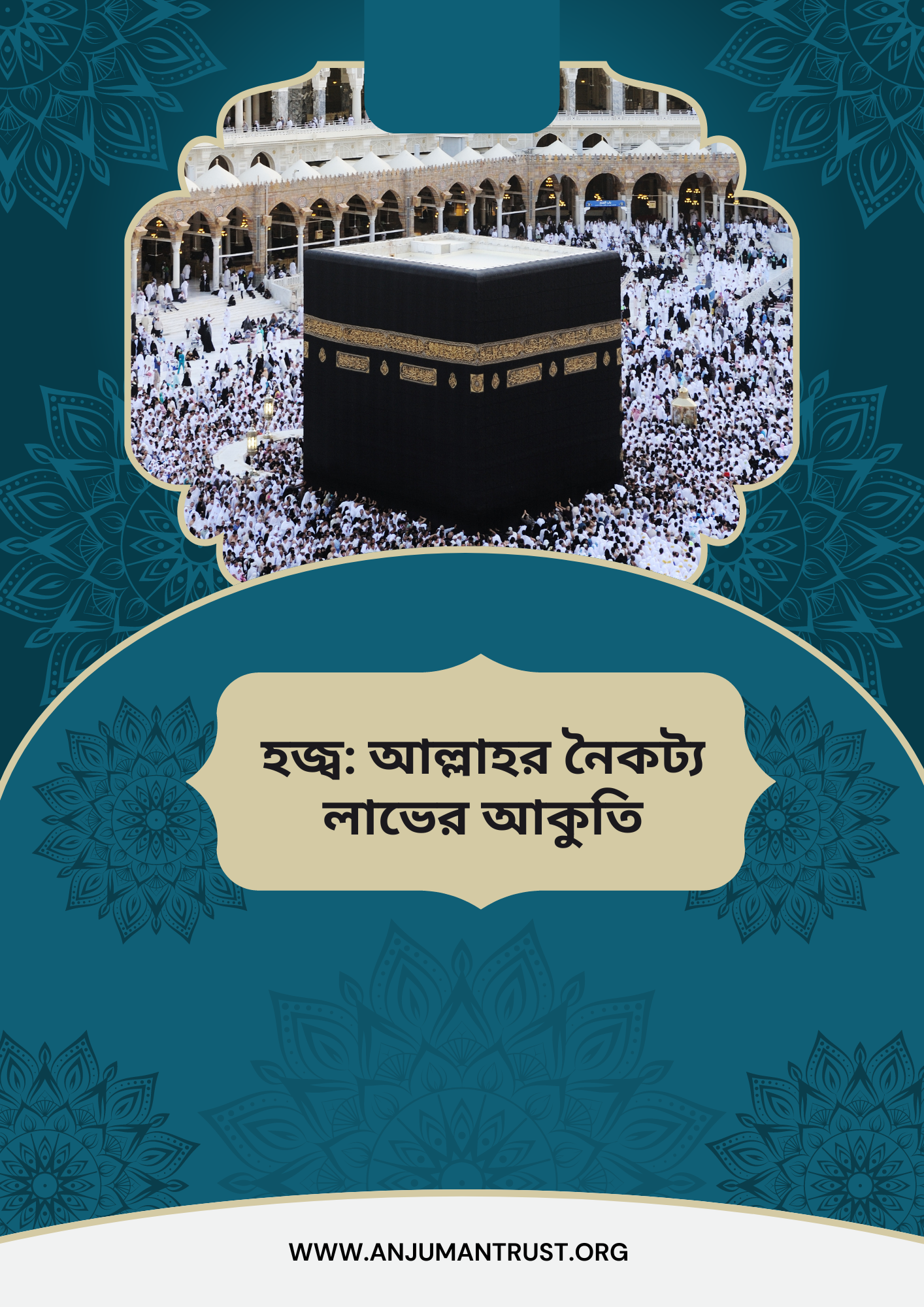
Hajj: A desire to draw closer to Allah
Ghazi Muhammad Jahangir Alam Jabir
Hajj is an Arabic word. Its lexical meaning is to resolve, to wish or to circumambulate. In terminology, Hajj is the performance of special tasks in the holy Kaaba and related places in a prescribed manner on specific days with the aim of gaining closeness and satisfaction of Allah. Hajj is a great gathering of the Muslim nation, a place of peace and a gathering of believers. Hajj is a place to strengthen mutual bonds, renew faith and get to know each other. The journey of Hajj towards the House of Allah is included in worship; which is a journey to gain pleasure and closeness to Allah. This journey is not for any other purpose, goal, worldly interest or attraction, but only the desire to gain Allah’s pleasure is desirable. It contains the perfect combination of spiritual, physical and financial worship at the same time. Hajj also includes performing various tasks in Mecca, Mina, Arafa and Muzdalifah from the 8th to the 12th of the month of Dhul Hijjah, according to the instructions of Allah and His Messenger (peace and blessings of Allah be upon him). It is obligatory for every healthy, adult, intelligent and capable Muslim man and woman to perform Hajj once in their lifetime. Any subsequent Hajj will be considered as voluntary.
Wearing the clothes of Ihram and leaving relatives behind and setting out on the journey of Hajj, wearing the shroud, reminds us of leaving relatives behind and setting out on the path to the Hereafter. It also reminds us that we should go to the court of Allah with a heart as pure and white as the clothes of Ihram. Obeying all the rules and regulations while in the state of Ihram clearly indicates that the life of a believer is not free but tied to the rope of Allah. He is ready to go wherever Allah pulls him.
Hajj is a rehearsal for the journey to the afterlife. After death, the servant is covered in white clothes. In the grave and on the Day of Judgment, everyone will gather without distinction. Wearing the clothes of Hajj Ihram, gathering at Arafa and Muzdalifah are a reflection of this. The beloved Prophets become restless and helpless after visiting various places associated with the memory of the Prophet (peace and blessings of Allaah be upon him) in the holy Mecca and golden Medina. Just as a lover wanders around like a madman to find his beloved. He does not settle down anywhere, cannot stay. He has no sense of his own body, food or rest. Similarly, the pilgrims wander around the Kaaba, looking for someone at the door of the Kaaba, at the Black Stone, at Hatim, under the Mizaab of Mercy, at Maqam Ibrahim, in every corner of the Kaaba. They run around in a state of anxiety to find someone in Safa, Marwa, Arafa and Muzdalifah. There is no rest day or night. There is no pomp and show on the journey. There is no laziness. He again rushes to Mina to stone Satan, to sacrifice, and from there he comes back to perform Tawaf. In this way, he is restless everywhere, anxious in the love of his supreme beloved, the loving, the merciful, the darkness of mercy, the great Allah; the One who created him, gave him everything without asking. He is providing food and drink, the means of survival, to call him to himself at the end of his life in Jannatul Firdaus, to have eternal life near his throne. The pilgrims search for that being of such infinite love in the guise of the dead, restless like a madman on the journey of Hajj.
Regarding Hajj, Allah Almighty says, “It is obligatory upon anyone among mankind who is able to reach the House of Allah to perform Hajj for the sake of Allah (Aal Imran).
Like all acts of worship, the soul of Hajj is sincerity. That is, performing Hajj solely for the sake of gaining the pleasure and closeness of Allah Almighty. It is very important to keep this act free from any worldly interests and objectives such as worldliness, fame, gaining the title of Haji, etc. No act is accepted in the court of Allah without sincerity. The Messenger of Allah (peace and blessings of Allah be upon him) said, “Whoever does a good deed for the sake of spreading it to the people, Allah will make the people hear the true intention of his deed.” And whoever does a good deed for the sake of showing it to the people, Allah will also make the people know his true intention (Bukhari, Muslim). Therefore, those who are fortunate enough to perform Hajj should pray to Allah for a Hajj free from show-off. This is the ideal and teaching of Allah’s beloved Prophet (peace and blessings of Allah be upon him). The Holy Prophet used to pray, “O Allah! Accept my Hajj as a Hajj free from show-off and desire for fame.” (Bukhari)
Hajj is to seek forgiveness from Allah through humility and humility, and to be blessed with Allah’s mercy and grace.
When the pilgrim’s heart is firmly convinced of Allah’s mercy, Allah’s mercy, forgiveness and mercy inevitably descend.
“The reward for an accepted Hajj is nothing but Paradise.” A person asked the Messenger of Allah (peace and blessings of Allah be upon him) about the best deed, and he replied, “Belief in Allah alone, then Hajj Mabrur, which is the best of all deeds. It is like the difference between the rising and setting of the sun.” When the Messenger of Allah (peace and blessings of Allah be upon him) was asked about the best deed, he replied, “Hajj Mabrur.”
The pilgrims chanted in unison, ‘Labbaik Allahumma Labbaik, Labbaik la sharika laka Labbaik, Innal Hamda Wanni’mata Laka Walmulk la sharika laka’. Which means – ‘I am present, O Allah, I am present, I am present, You have no partner, all praise and blessings are Yours alone, all dominion is Yours, You have no partner’. The heart of a believer is filled with this yearning – I have appeared, O Allah! I have appeared! I have come, I have come to respond to Your call. I have come to surrender everything I have to You. By reciting this Talbiya, one expresses his presence to the great Creator and asks for forgiveness of sins.
Send feedback
Use the arrows to see the full translation.









About Post Author
